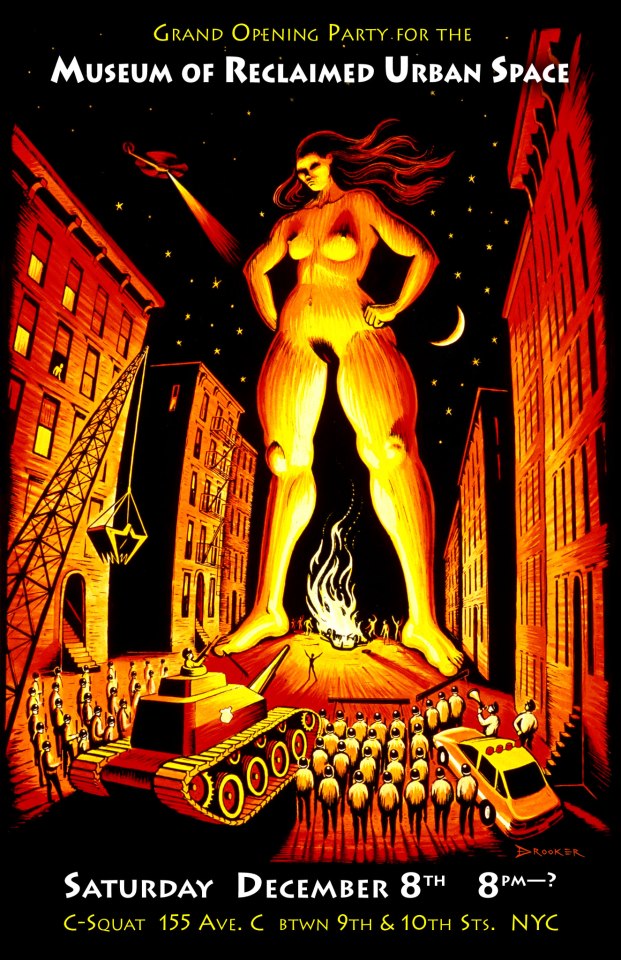
One of the most fascinating parts of my life in New York involves traversing the
steps and stories of friends throughout the city. Sometimes these stories take me through the
community gardens or ways to re-imagine what the city could be if sea levels
rise and climate chaos continues. This
conversation was the topic of last Sunday's "Adopting to Change"
ride. We met in Tompkins Square
Park in the Center Circle.
Sandy's storm waters surged into Manhattan, heralding a new
21st century reality. We'll ride along the new coastline, and explore both the
aftermath and solutions generated in the East Village that mitigate or adapt to
the realities of climate change. Ride includes discussion of practical
responses that increase livability as well as long term planning options for a
more resilient NYC. All are welcome on
this 2-hour ride by Green Map System, co-sponsored by Time's Up! Explore and
embed GreenMap.org/nyc-energy too.
Meeting in the middle of the park, Wendy from GreenMap was there to greet me. Peter was there to film, as were several other riders and activists. Wendy pulled out a 17th Century Map of New York City, showing much of the Lower East Side of New York was a marsh land.


Wendy passed out maps showing possible marsh lands and rising waters in the Lower East Side based on that old map and the water we saw with Sandy.

We toured through much of what the city, looking at various green projects and buildings, imagining what a more sustainable model of a city would be like, if we had more community gardens, such as the one we created at 181 Stanton Street this summer. A group of activists collaborated with neighbors, who dreamed about what a vacant lot could look like it was liberated from a fence surrounding it. We cut down the fence, started cleaning up, brought in friends, collected signatures in support of the garden, built our allies, and gained support from the community board. When Sandy hit, this garden was one of the few spaces where water could go in an asphalt jungle. Standing in front of the lot, supporters talked about the need to get people into the gardens, increasing the time when they are open, and helping build support for convivial social ties so social networks are in place to support these spaces before they face inevitable attacks by those who hope to privatize, bulldoze and develop such spaces. Through the ride, we started planning gardening events for the space that very moment.


 |
| JK and company on our tour. |
Riding down to Delancy, we looked at the bike path coming down from the Williamsburg Bridge, imaging a different, safer kind of entrance into the city. We talked about the underground subway station under the street owned by the MTA, wondering if the LowLine Park people have been discussing will ever work. Others suggested parking the cars on the vacant lots below Delancey actually down there.
A group of us rode to the East Rider, where we talked about the water rising ten feet higher than usual during the storm. Rather than a seawall, hopefully we can create a marshes to slow the rising. It's all part of reimagining the city.


The city is always shifting and changing with historic and social forces reshaping the ways it is organized, policed, and enjoyed. For those in the activist world, we know each other from years of street protests, meetings, and actions. My friends Lesley Wood and Marina Sitrin are a part of a cohort of activist friends I know from a five year period from the late 1990s, as we fought Giuliani 's attacks on public space, as well as the steamroller of corporate globalization, building a global movement, only to watch it morph into a peace and justice movement after 9/11. They are friends I love seeing at Occupy actions a decade later. I also owe them much as scholar activists who allowed me to interview them for my dissertation on pleasure and social movements.

This Thursday, we will continue a conversation we have been having about activism for a dozen years, at the Bluestockings, where I interviewed Sitrin and others for my dissertation years ago.
Thursday, December 6th @ 7PM – $5 Suggested
Discussion: Local Conditions and Global Movements – Direct Action, Creativity and Strategy
Featuring: Benjamin Shepard, Marina Sitrin, and Lesley Wood
What are the conditions that allow local organizers to build off of protest in other cities and places? How do local histories, successes and patterns of communication affect our ability to incorporate new ideas? How can we create opportunities to be more open, creative and strategic in our movements? These questions will launch a conversation with Marina Sitrin, Ben Shepard and Lesley Wood.
Benjamin Shepard is the author and editor of six books including “Queer Politics and Political Performance: Play, Pleasure, and Social Movement,” “White Nights and Ascending Shadows: An Oral History of the San Francisco AIDS Epidemic,” “From ACT UP to the WTO: Urban Protest and Community Building in the Era of Globalization.” Marina Sitrin is the author of “Everyday Revolutions: Horizontalism and Autonomy in Argentina” and “Occupying Language” in the Occupied Media Pamphlet Series. Lesley Wood is the author of “Direct Action, Deliberation and Diffusion: Collective Action After the WTO Protests in Seattle.”


Satudurday, we will continue this conversation about regular people reimagining public space at the opening of the Museum of Reclaim Urban Space. Much of the genesis for MoRUS was born of conversations, bike rides, garden tours and readings. Over the years, Times Up! has held countless garden tours, looking at the history of gardening and non-polluting transportation. Much of the activist perspective on this history is being whitewashed away, argued Bill Times Up!, echoing Sarah Schulman's point from the Gentrification of the Mind. Changes don't just happen, people make them happen. AIDS drugs were not released because the US government became nice. AIDS activists forced them to do the right thing. Gardens are not preserved because the city likes them. They are there because people fought for them. Looking at this history, Bill suggested we should open a museum to highlight the real history during a summer 2011 garden tour organized by Times UP!


 \
\


 |
| Times Up! garden tour 2011. Photos by Erik McGregor |
Later that summer, I organized a reading on our book The Beach Beneath the Streets: Contesting New York's Public Spaces. Laurie Mittelmann , from Times Up!, was there taking notes on that history. A writer who has long chronicled the stories of New York's activist community, Laurie worked with Bill to help organize volunteers, procure a space, and start holding radical history tours of the Lower East Side. The result was the Museum of Reclaimed Urban Space.


 |
| MoRUS tour spring 2012. Photos by Eric McGregor |
The space highlighted the local history of the Lower East Side and New York, looking at the ways regular people have been able to have an impact on our city, its history, and public spaces. The museum highlights efforts to support non-polluting transportation, of activists organizing bike rides making streets safer for cyclists, years before the city create bike lanes. It also highlights the efforts of activists to fight to save gardens. Downstairs in the basement of the museum, Bill placed signs from Zuccotti Park as well as a cardboard bulldozer we used to help attempt to bulldoze the building placed on the site of the Esperanza community garden after it was bulldozed. This was a space where regular people celebrating people's victories in creating a more sustainable city.

 |
| Bulldozer attacks bulldozer smashing into Donald Capocia's building where eseranza garden once stood. Top Photo by Gamma Blog Bottom by Jefferson Siegel |
Ironically, this document of sustainability was flooded by Hurricane Sandy. I walked down into the basement the day after it was flooded, finding the bulldozer soaked. Immediately after it was flooded, people from the community came to help support the space, while offering free meals to those in the neighborhood from food procured from dumpster dives. Times UP! set up energy bikes and charged people's phones. The direct action of the day was care and connection.
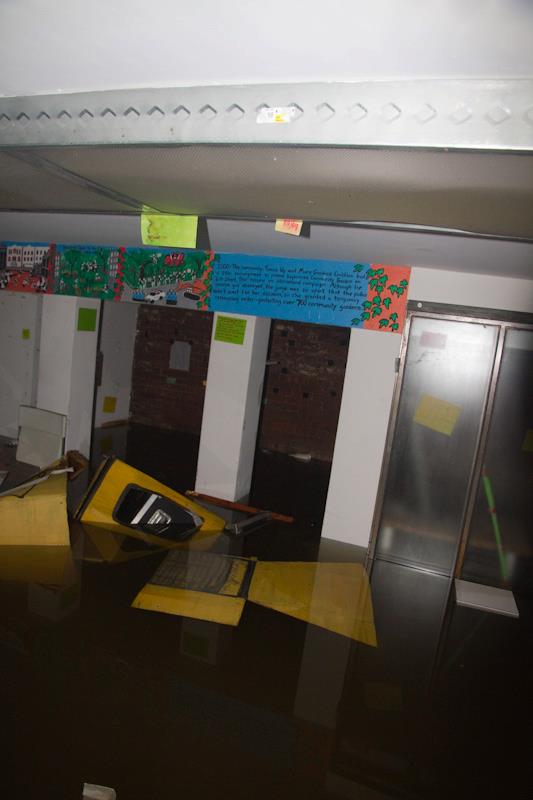 |
| Flooded bulldozer in MoRUS basement the day after Sandy. |
The space opens this Saturday.

MUSEUM OF RECLAIMED URBAN SPACE TO
OPEN IN NEW YORK’S EAST VILLAGE
Volunteer-Run Organization Throws
Kick-Off Party to Preserve Local History
NEW YORK (November 26, 2012) – The
Museum of Reclaimed Urban Space (MoRUS) will open its doorsto the public on
Saturday, December 8 at 3pm following a year’s effort by community members and
the museum’s all-volunteer staff. This museum and archive of urban activism is
itself the latest instance of the collaborative spirit of New York City’s East
Village.
Originally slated to open in
mid-November, MoRUS was forced to push back its grand opening date due to flood
damage following Hurricane Sandy. In the days following the storm, MoRUS
created a cell phone charging station for the community using a bike generator
lent to the museum by environmental group Time’s Up! The energy bike has received
mention in the press, from The Wall Street Journal and NBC News to RT.
Volunteers are now in the process of restoring the damaged basement for the December
8th opening, and the museum has created a campaign on Indiegogo to raise
additional funds.
Saturday’s afternoon events include
a chain-cutting ceremony, museum and community garden tours, slideshows, and
presentations by community organizers. The grand opening party starts at 8pm
and will feature food, drinks, and music, including an appearance by the Rude
Mechanical Orchestra, East Village’s own radical marching band.
Co-founded in 2011 by Bill Di Paola,
founder of environmental organization Time’s Up!, and Time’s Up! volunteer
Laurie Mittelmann, MoRUS is located in the building also known as C-Squat, a former
squat that is part of the very history the museum aims to preserve. C-Squat is
now in the process of becoming a low-income housing cooperative, and its
residents are among those who helped build the museum.
MoRUS documents how sustainability
and local activism took root and flourished in New York City. Today’s
widespread trend toward sustainable communities can be traced back to the
history of transformative grassroots initiatives in the East Village. Over the
last forty years, community members and local organizations repurposed many
abandoned buildings and vacant lots into vibrant community spaces and thriving
community gardens that are still enjoyed by the community today.
MoRUS will share the story of the
East Village’s radical evolution through three main programs: walking tours of
the neighborhood’s community gardens, squats, and sites of social change;
photograph, video and article exhibits; and events featuring local artists,
activists, and skill share workshops.
###
The Museum of Reclaimed Urban Space
(MoRUS) is a history museum and living archive of urban activism that aims to
preserve the rich history of grassroots movements in New York City’s East
Village and showcases the unique public spaces for which the neighborhood is
renowned.
We will kickstart the event at 3 p.m.
with a chain cutting ceremony led by Councilmember Rosie Mendez. Afterwards,
please join us for presentations and talks by Adam Purple, Seth Tobocman, Fly,
Pete Missing, Ben Shepard, Frank Morales, as well as Reverend Billy & The
Church of Stop Shopping and members of Bread and Puppet Theater. The Rude
Mechanical Orchestra will lead a march at 8, and we'll end the night with a
grand opening party, also at 8, with music by DJ Dirty Finger, RMO and more, as
well as plenty of food and drinks.
I'll be reading at 5:30... please join
us!!!!!!!!!
And lets celebrate what the city might
be together.

The other day, Caroline asked me what I
thought I would be doing with activism for the next decade and I said I would
be looking at how to help New York become a model city for city for sustainable
solutions. Join these conversations this
week, as we all reimagine our city. Now when I look at space, I see ways to open it open. Last night at Jalopy, there was a sign on a fence with an add a signing from 596 Acres saying we should open this space. More than ever, today we need to reclaim public space for the people.





0 Comments