Day 133 - GIFtionary
(Earth's Revolution and Seasons)
Unit 11 - The Earth-Sun-Moon System
(Earth's Revolution and Seasons)
Unit 11 - The Earth-Sun-Moon System
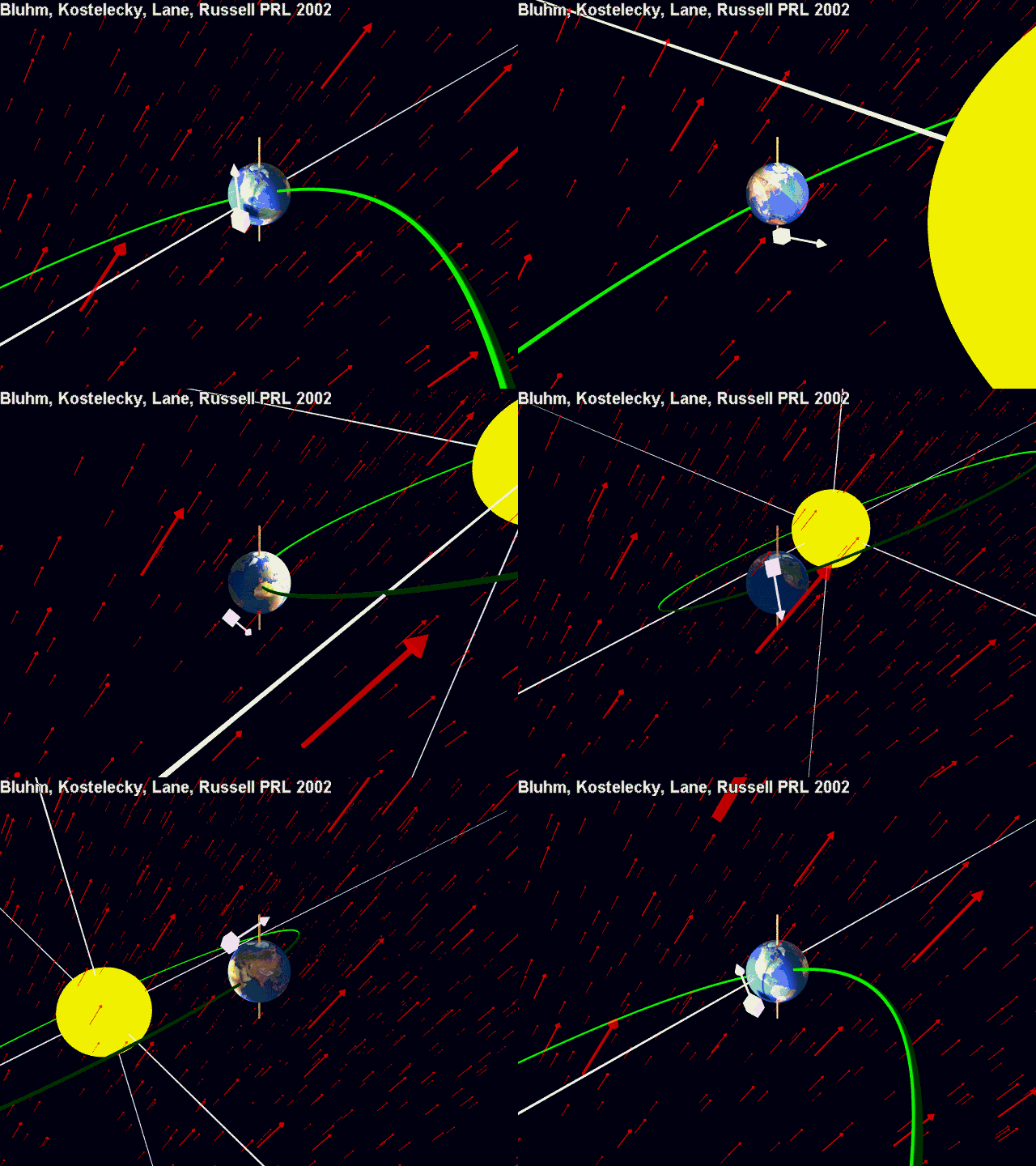
"Remember that Earth is closer to the sun in January, NOT July! The reason we have seasons has NOTHING to do with distance to the sun!!"
-Mr. Gruszka
-Mr. Gruszka
133.1 How do we describe Earth's motion around the sun, and what is the evidence for this motion?
As we saw last lesson, Earth's rotation causes several motions of objects in the sky we recognize—most namely the rise and set of the sun, moon, and stars. However, as you probably already know, this is not the only motion that Earth does.
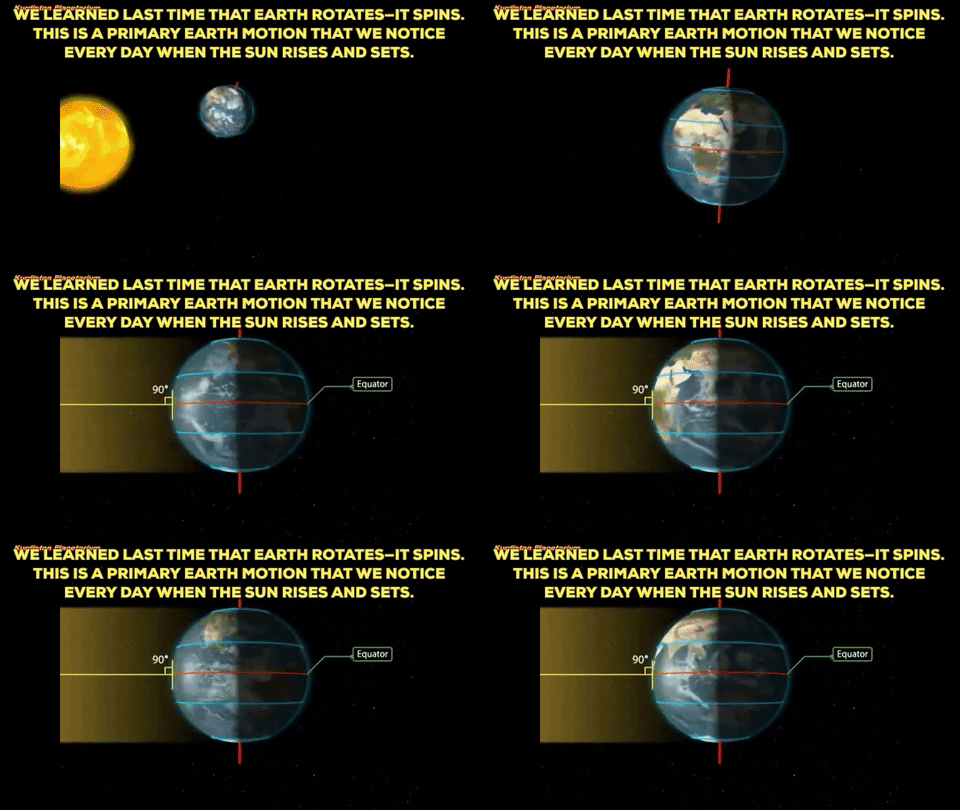
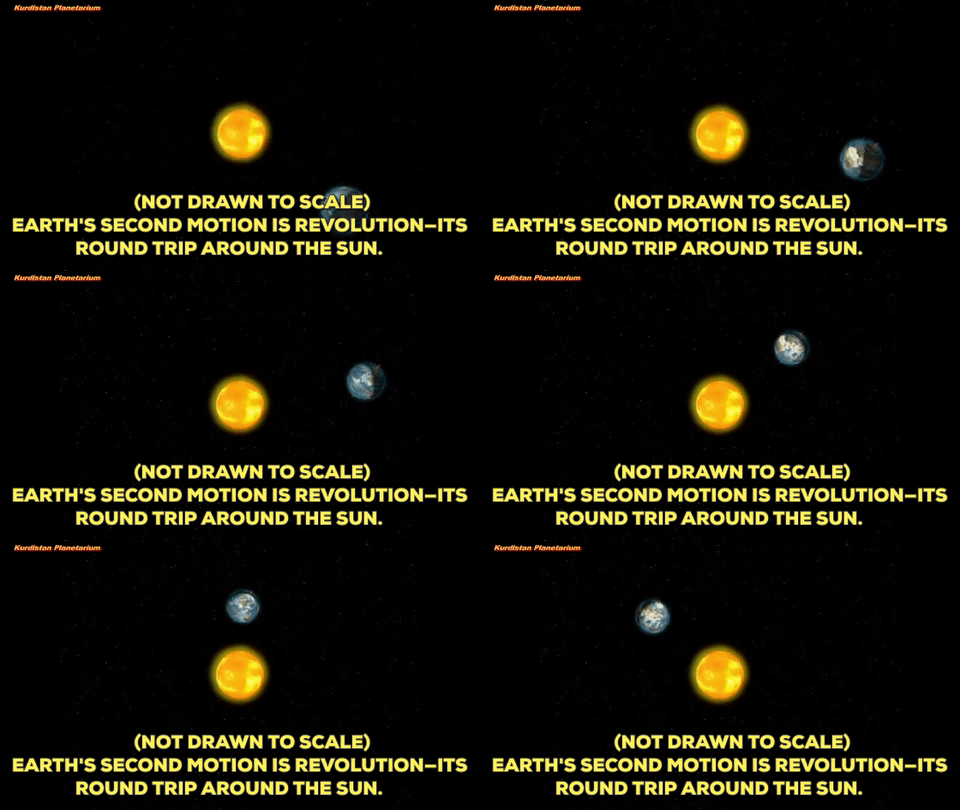
Another motion that Earth does is called revolution, the complete circling of the sun by the Earth. It takes Earth a full year to make this motion and is the basis of our calendar year. Each day, the Earth completes a little less than 1° of its full orbit since it takes 365 days to move 360°.
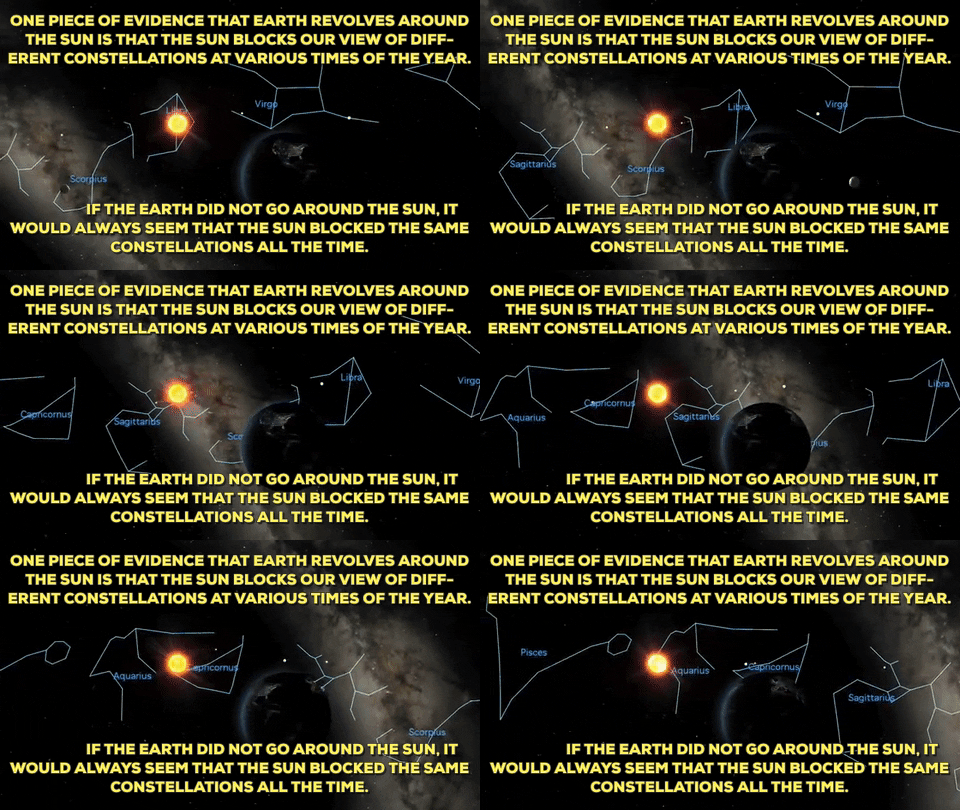
A major piece of evidence that Earth indeed moves around the sun is based on star constellations. Namely, because the Earth moves around the sun, the background of constellations visible at different times of the year changes. If the Earth did not move around the sun, the stars at night would always look the same.
Moreover, you should know that Earth does not move around the sun in a circular orbit. It is actually an ellipse—an elongated oval-shape. The actual ellipse of Earth is only slightly off from being a perfect circle, but it might surprise you to know that Earth is slightly closer to the Sun in January and slightly farther away in July.
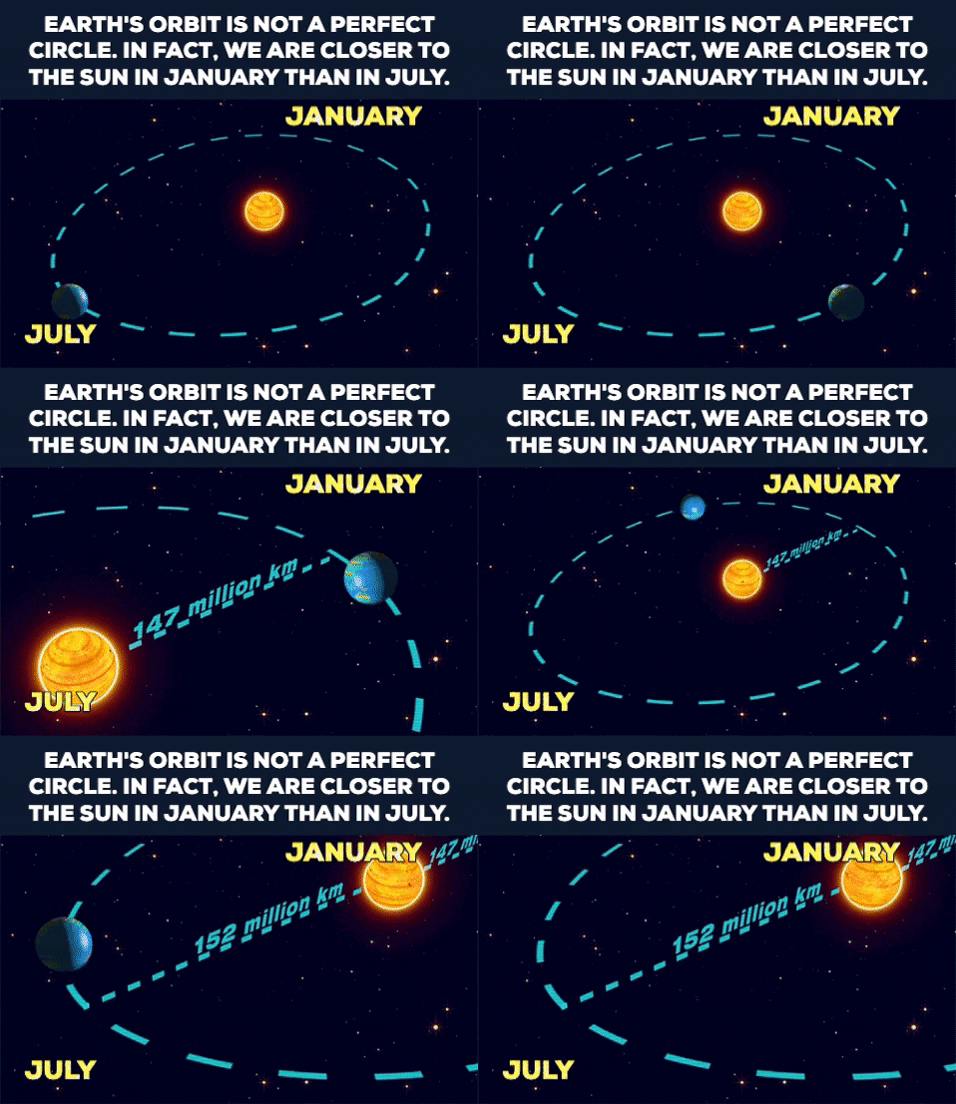
That's right! In our summertime in NYC, we are actually farther away from the sun! So why are temperatures warmer during this time? The answer has to do with the orientation of Earth as it orbits the sun. We will explain this below.
 133.2 What is a solstice, and how do we tell which is shown on a diagram?
The Earth does not rotate straight up and down relative to the plane of its orbit around the sun. It is actually tilted 23.5°. This tilt is pretty stable (thanks to the pull of the Moon), and it creates a situation in which at different times of the year, the north pole is pointing toward or away from the sun.
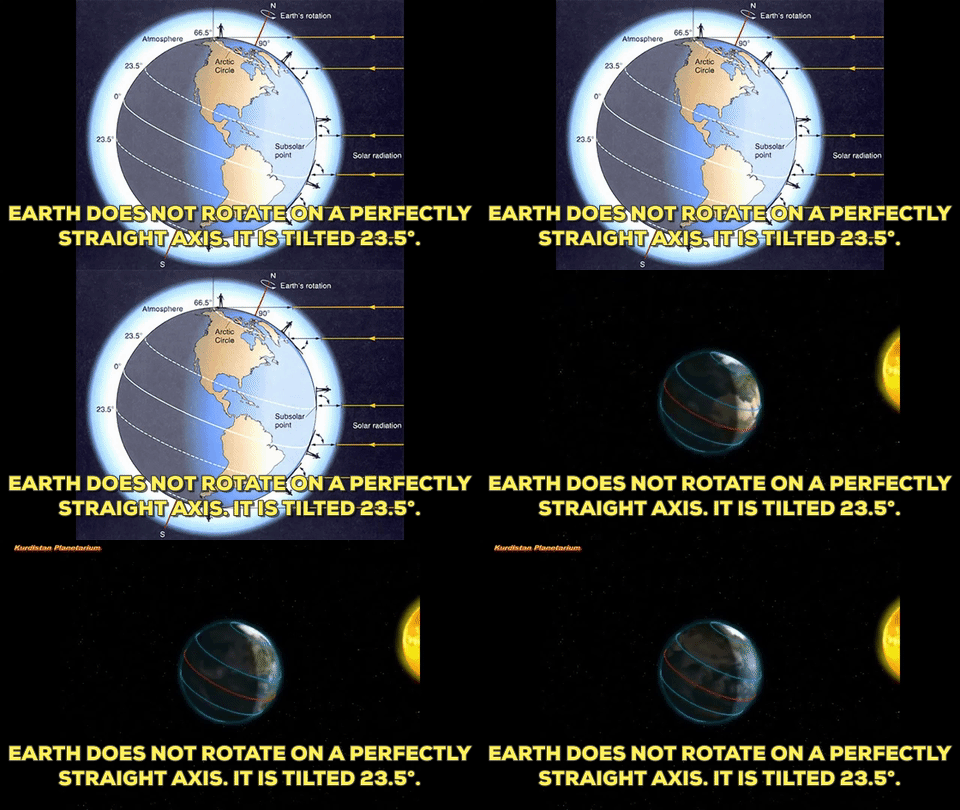
For example, in June, the north pole is pointed as directly at the sun as it will be all year. In December, on the other hand, it is pointed as away from the sun as it will be the whole year. This pointing of the pole caused by the tilt of Earth's axis is actually the reason for the seasons.
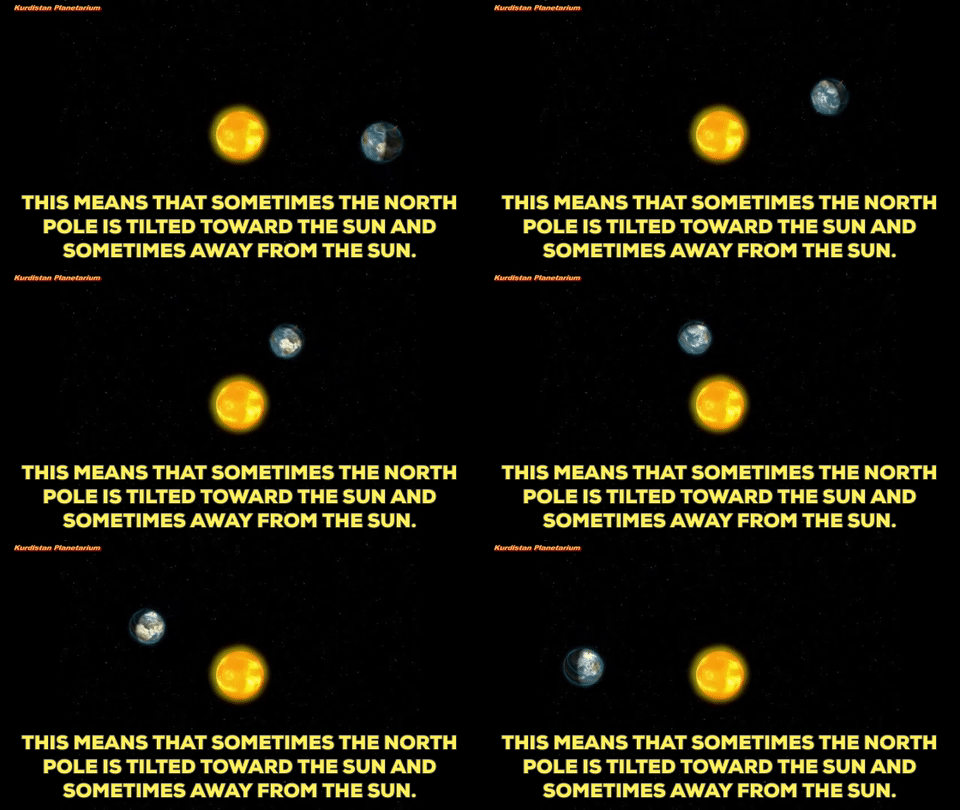
The most important dates to be able to recognize are called solstice days. These days (June 21 and December 21) are the first days of the summer and winter for NYC.

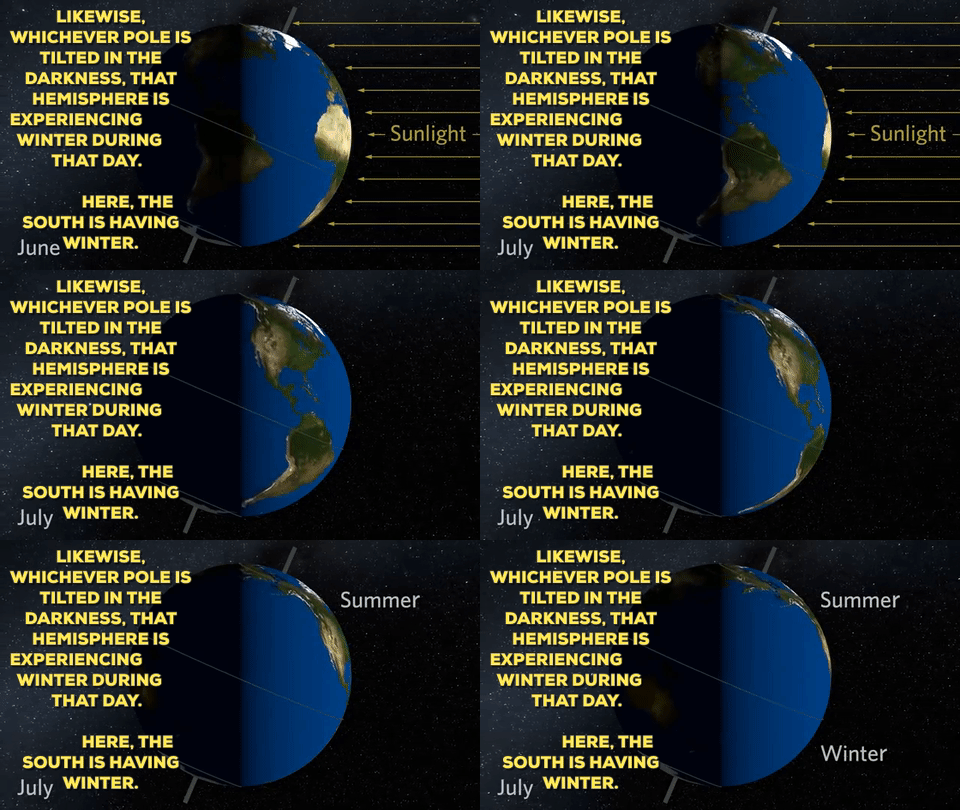
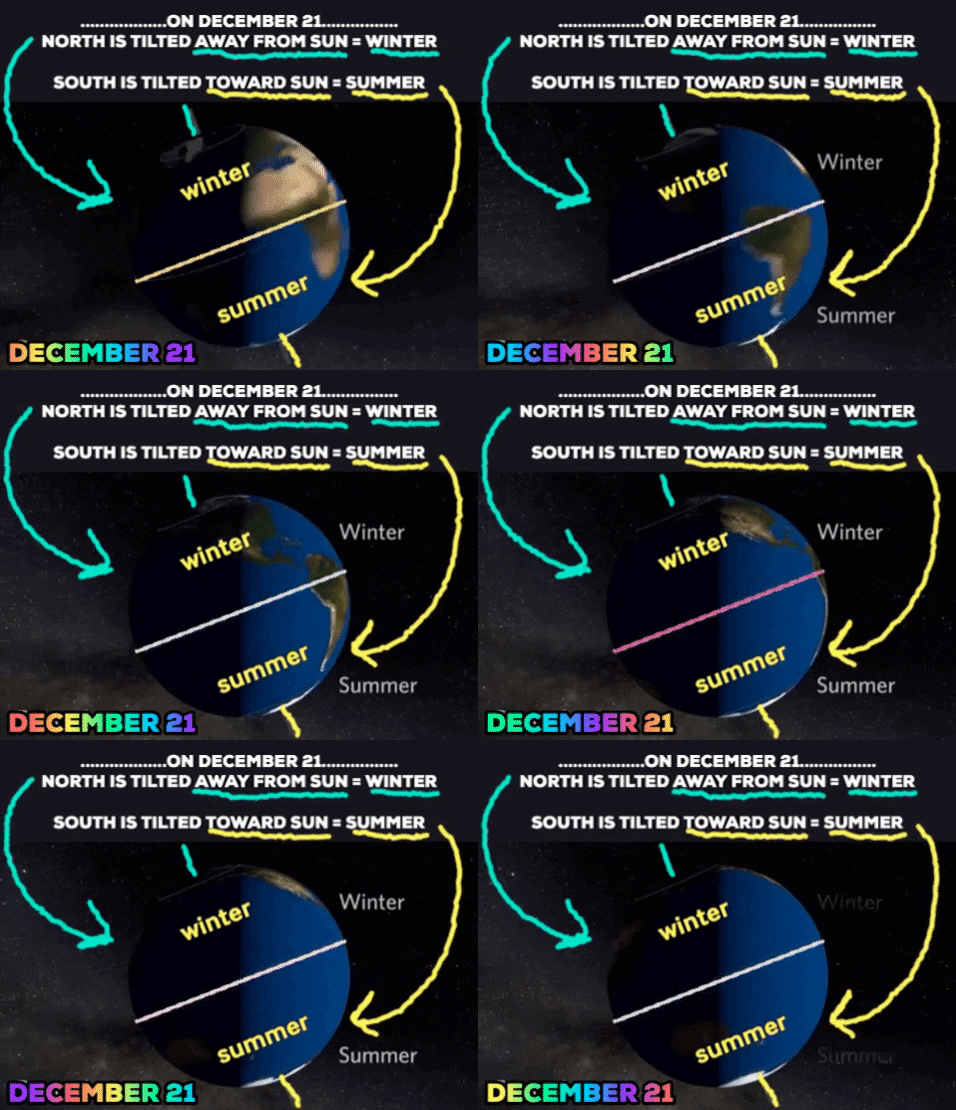
It may surprise you to know that the seasons are not constant over the entire planet. In fact, on our first day of winter (December 21), it is the first day of summer for places like South Africa, Australia, and Argentina. This is because when the northern hemisphere is tilted away from the sun, the southern hemisphere is tilted toward the light and vice versa. Whichever pole is tilted toward the sun experiences summer on that solstice, and the other hemisphere experiences winter.
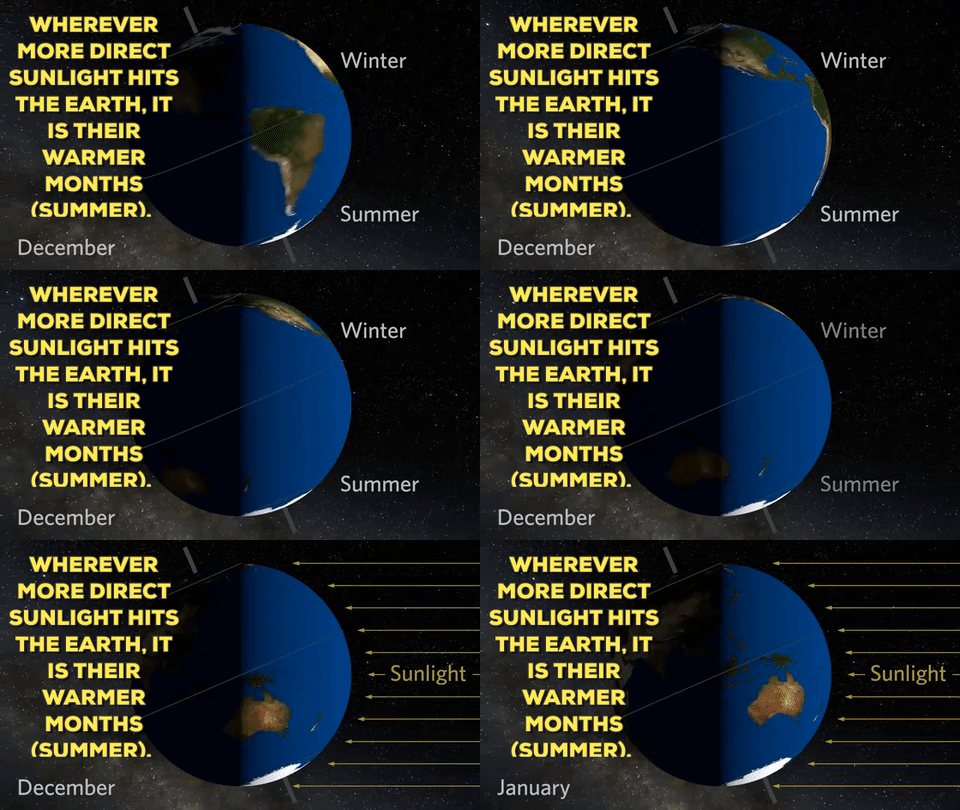
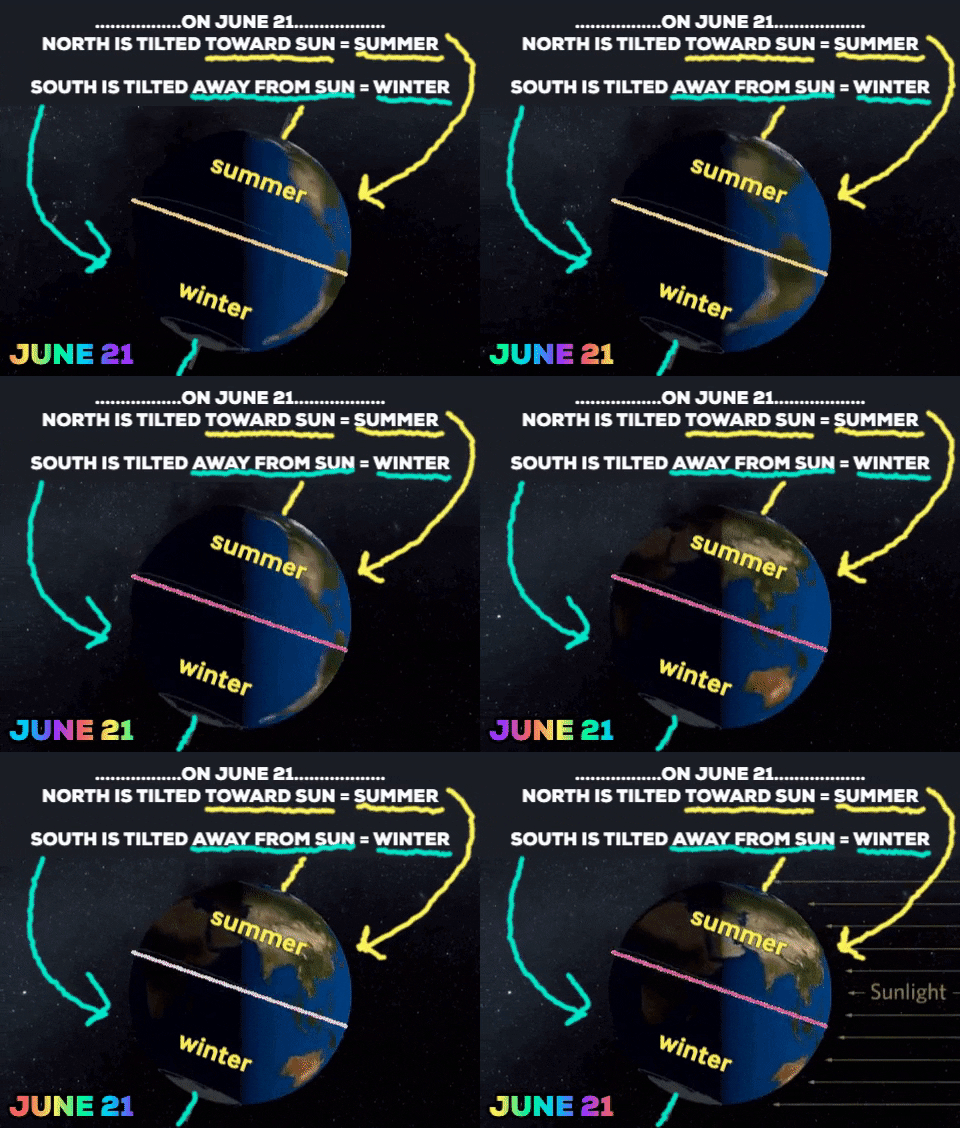
Take a look at the diagram below which shows the orientation of the Earth on June 21. On this day, the north pole is tilted toward the sun and the south pole is tilted away from it. Because of this, June marks the beginning of the summer for places like NYC and also the beginning of winter for other places like Australia.
The Earth does not rotate straight up and down relative to the plane of its orbit around the sun. It is actually tilted 23.5°. This tilt is pretty stable (thanks to the pull of the Moon), and it creates a situation in which at different times of the year, the north pole is pointing toward or away from the sun.
For example, in June, the north pole is pointed as directly at the sun as it will be all year. In December, on the other hand, it is pointed as away from the sun as it will be the whole year. This pointing of the pole caused by the tilt of Earth's axis is actually the reason for the seasons.
The most important dates to be able to recognize are called solstice days. These days (June 21 and December 21) are the first days of the summer and winter for NYC.
It may surprise you to know that the seasons are not constant over the entire planet. In fact, on our first day of winter (December 21), it is the first day of summer for places like South Africa, Australia, and Argentina. This is because when the northern hemisphere is tilted away from the sun, the southern hemisphere is tilted toward the light and vice versa. Whichever pole is tilted toward the sun experiences summer on that solstice, and the other hemisphere experiences winter.
Take a look at the diagram below which shows the orientation of the Earth on June 21. On this day, the north pole is tilted toward the sun and the south pole is tilted away from it. Because of this, June marks the beginning of the summer for places like NYC and also the beginning of winter for other places like Australia.
133.3 What is insolation? How does this affect seasons?
When understanding what about the light makes these seasons and dates so different in the north and southern hemispheres, you will encounter a new vocabulary word: insolation. Insolation is an abbreviated form of "Incoming Solar Radiation" and is Regents-speak for "light and heat energy from the sun," also known as sunlight.
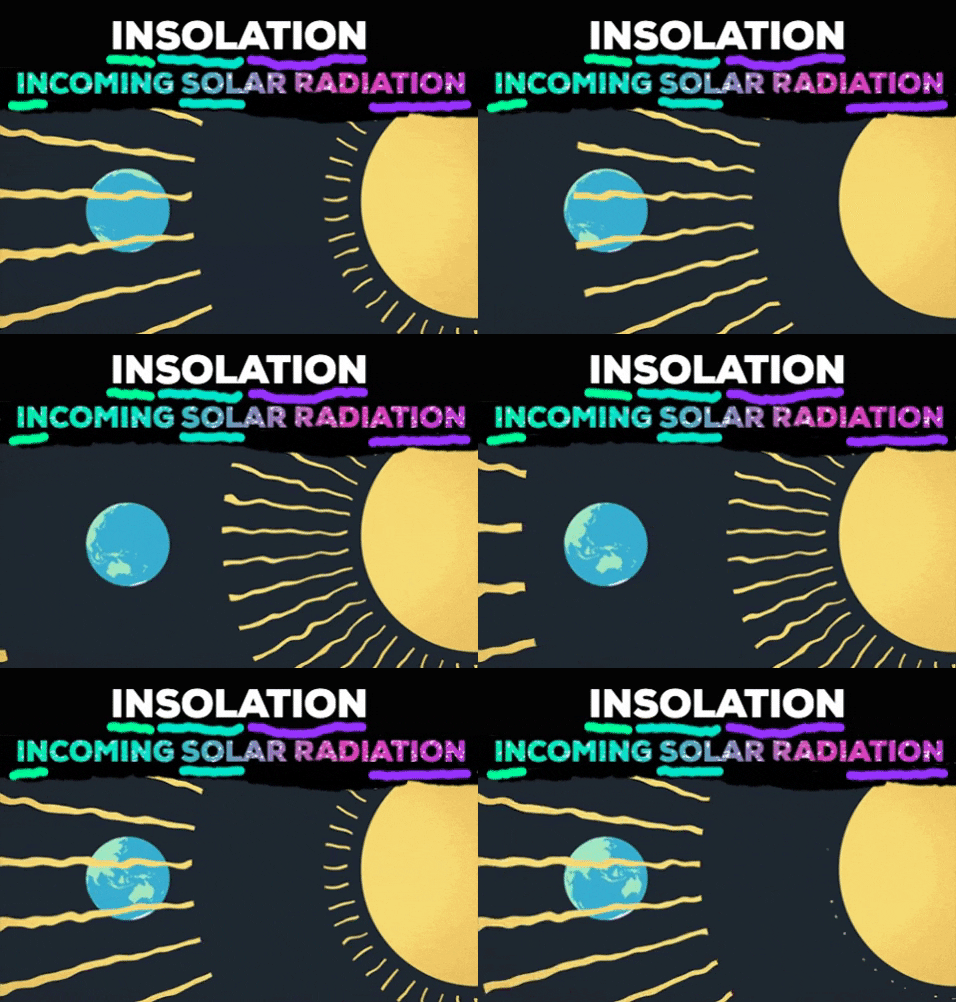
When talking about insolation, we will always discuss the angle that insolation makes to the ground when it hits it. For the purposes of our discussion, the most direct and intense light will always make a 90° to the ground.
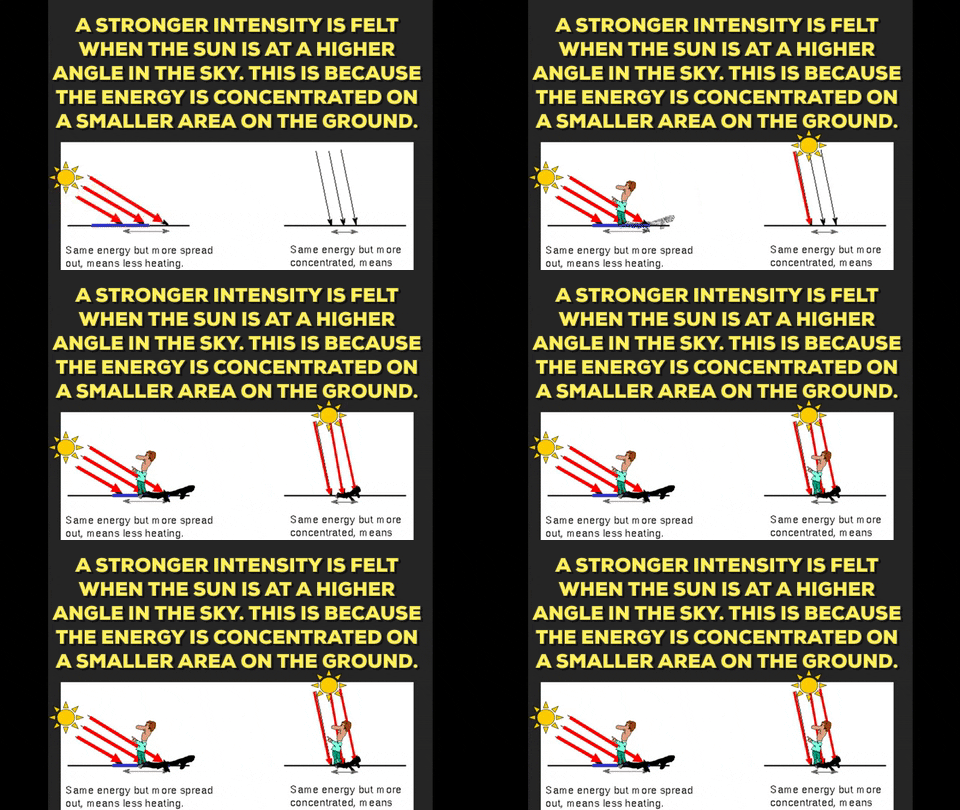
This means that the most direct light hitting Earth at any given moment is striking the ground at a 90° angle. You can think of this as the focus point of light and heat energy for that moment, and this location changes depending on whether it is the summer or winter solstice.
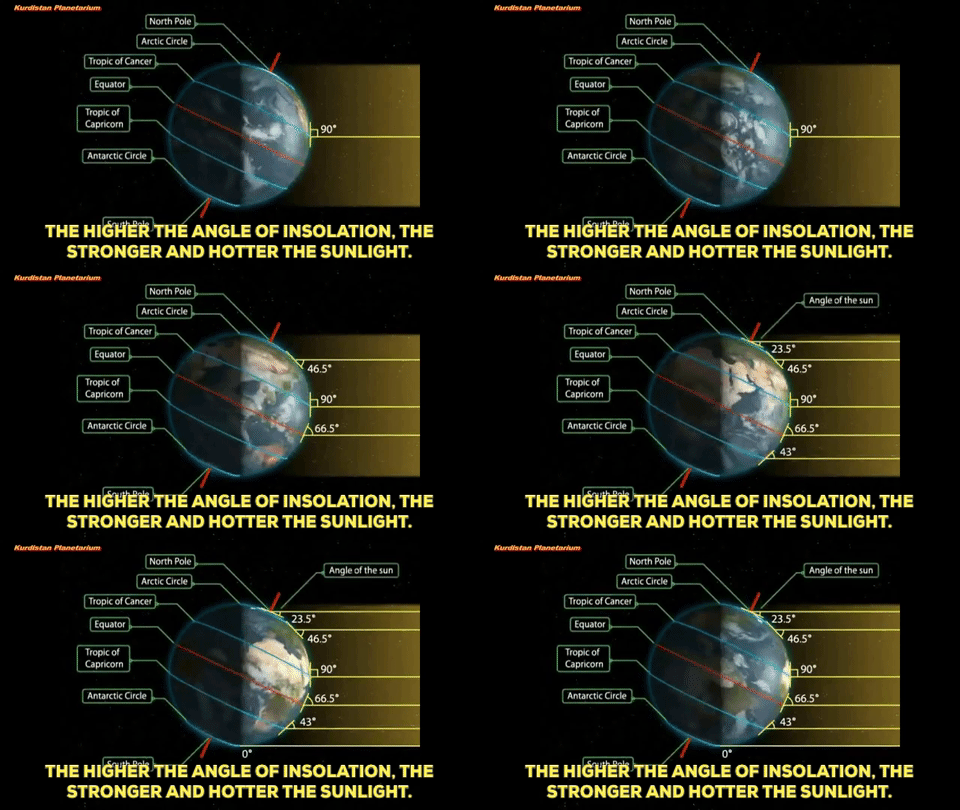
On June 21, the highest angle of insolation hits the Earth in the northern hemisphere. This makes sense because, as we discussed above, it is summer in the northern hemisphere on this day.
Contrarily, on December 21, the direct angle of insolation hits the Earth in the southern hemisphere, where December is the beginning of their summer.
133.4 What is it like in the Arctic and Antarctic Circles?
One final consideration that you will be required to know about the Earth and its seasons is the duration of insolation (hours of daylight) at the Arctic and Antarctic Circles. These are two different places on Earth where for several months of the year, the sun either never rises or never sets.
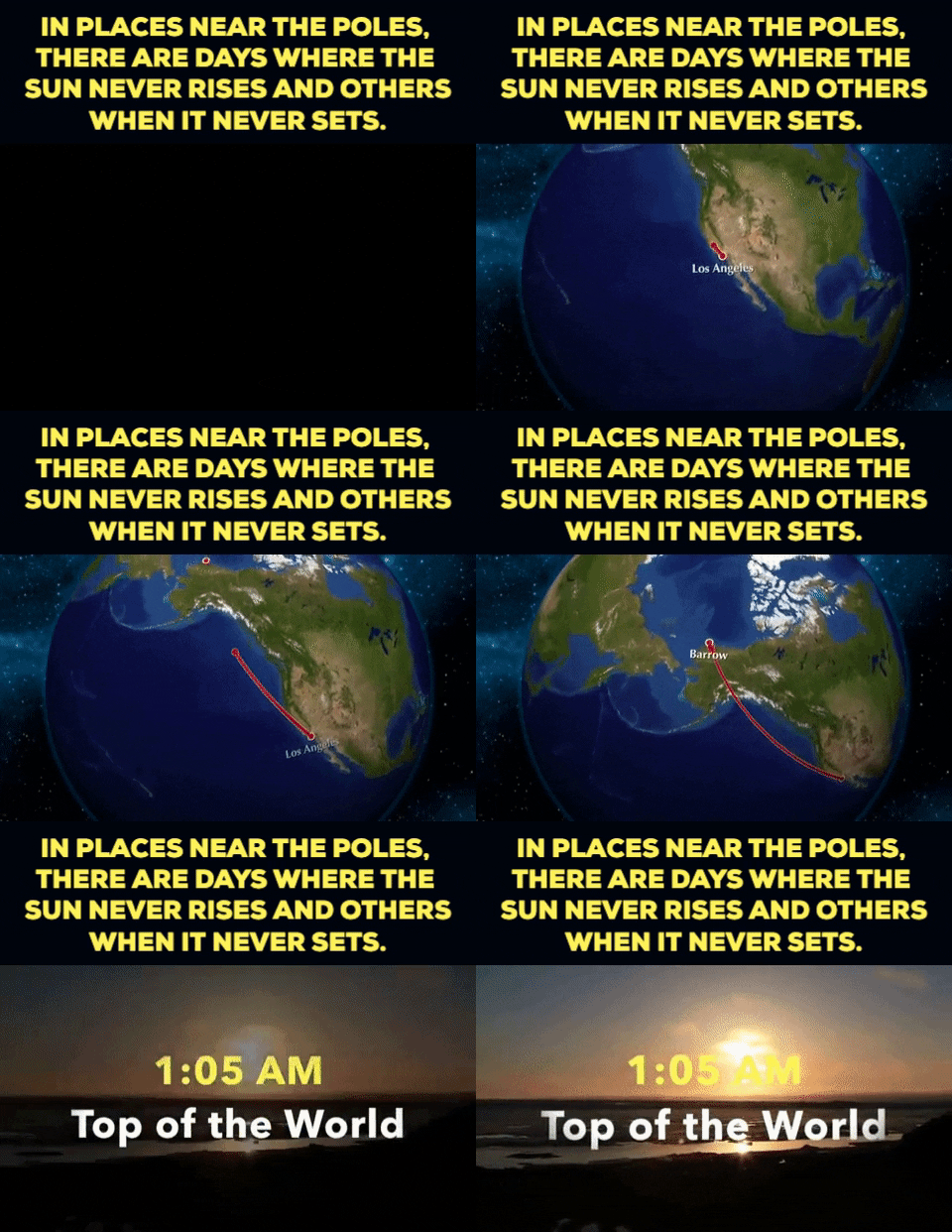
For example, if you travel to Barrow, Alaska during the summer months, the sun will be out at 1AM and will not set for several weeks.

If we were to stay put in one place for the whole day, the sun would appear to start setting and start rising again for 24 hours of continuous light.
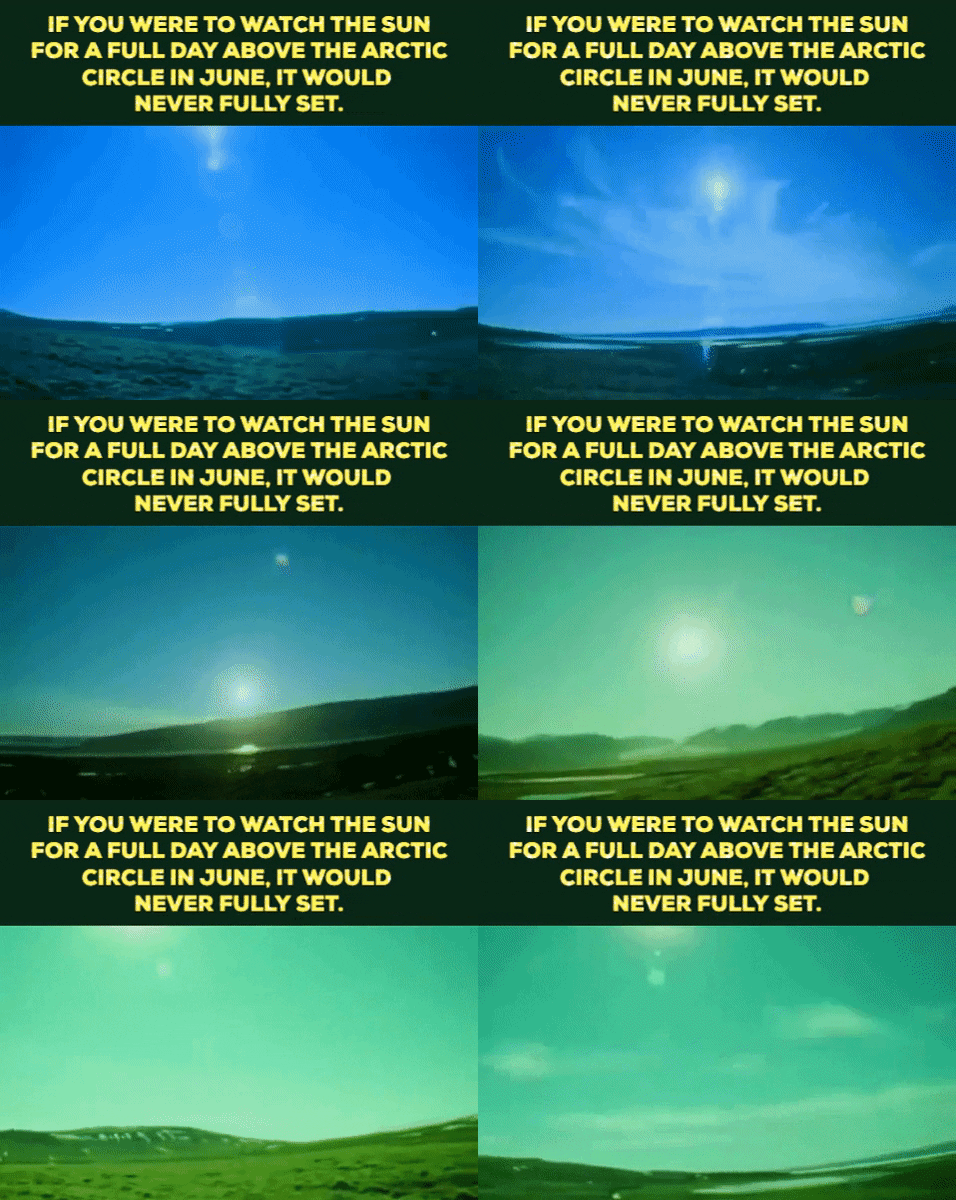
This is because at the North and South Poles, during the winter and summer, the entire area stays in the shadow or the light of the sun because of the tilt of the Earth. In other words, when the North Pole is tilted toward the sun, it spends the whole day spinning in the light. In the winter time, when the pole is in the shadow, it spins the whole day in the shadow, and this is why it experiences 24 hours of darkness.
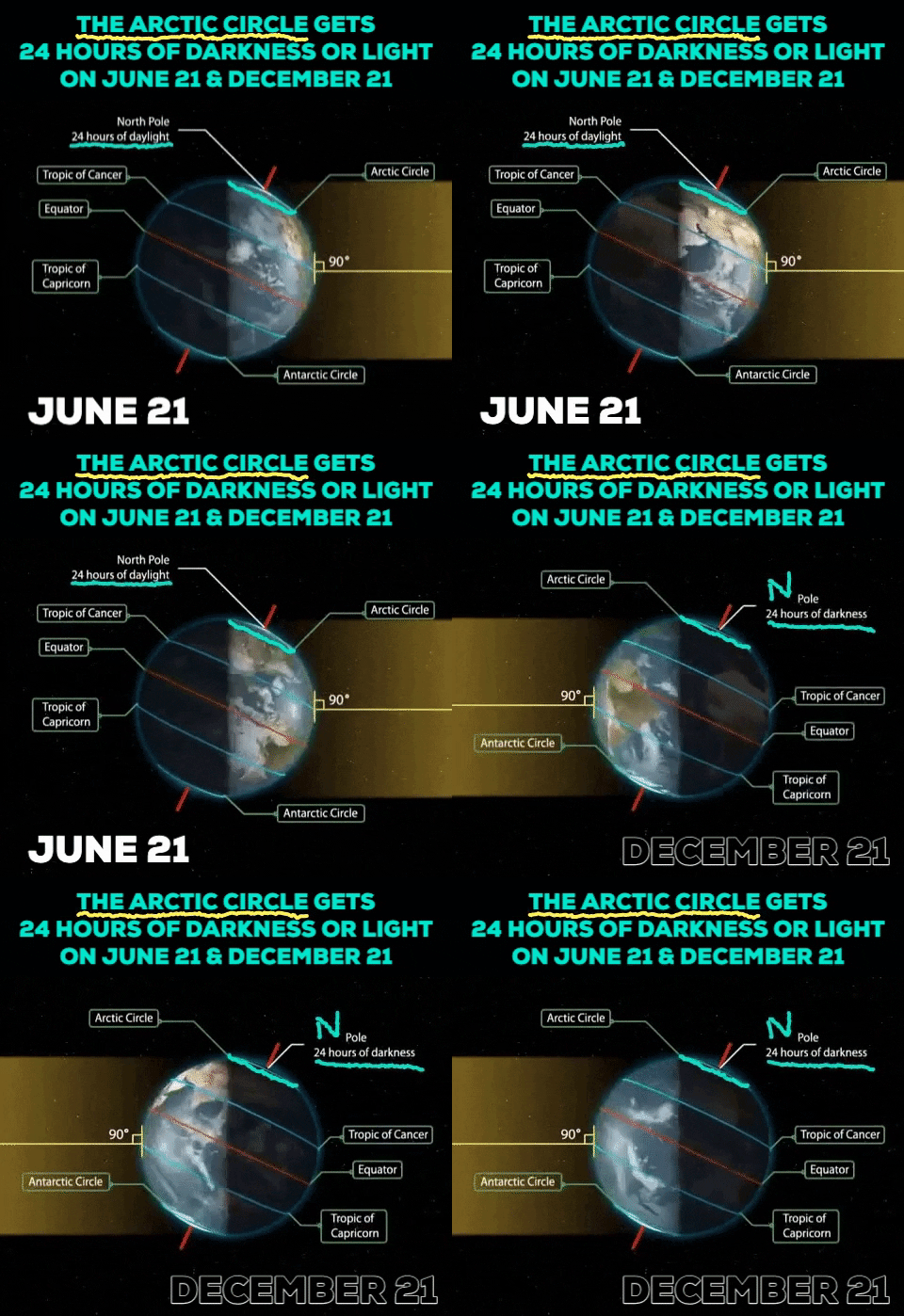
Only in locations that are more than 66.5°N or S does this happen. Since this dividing line is worth noting, we call this the Arctic Circle (66.5°N) and the Antarctic Circle (66.5°S).
***************************************************
Remember, we have the Earth's "gansta lean" to thank for the change of seasons!! On that note, see you tomorrow!!






0 Comments